Content Marketing
Content marketing is all about sharing useful and engaging content that connects with your audience. It helps build trust, showcase your expertise, and keep your brand top of mind. With the right content, you can turn visitors into loyal customers.
What is Content Marketing ?
1. What is Content Marketing?
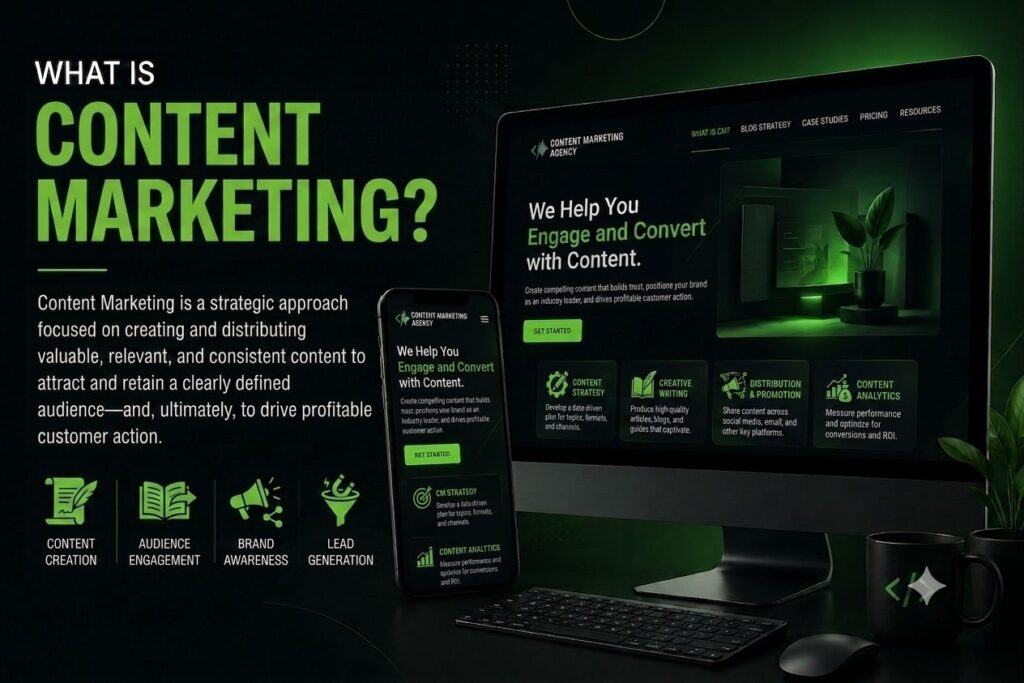
Content Marketing is a strategic marketing approach focused on creating and distributing valuable, relevant, and consistent content to attract and retain a clearly defined audience. Unlike traditional advertising that directly pitches products or services, content marketing provides helpful information, answers questions, and solves problems for potential customers. The primary goal is to build trust, establish industry authority, and ultimately drive profitable customer action over time.
2. Core Pillars of Content Marketing (Strategy, Creation, and Distribution)
Content marketing operates through three fundamental phases: strategy, creation, and distribution. A solid strategy begins by researching audience buyer personas and identifying their pain points. Content creation then focuses on producing high-quality media—such as blog posts, videos, podcasts, infographics, or eBooks—tailored to those needs. Finally, distribution ensures the content reaches the target audience through appropriate marketing channels, including social media, email newsletters, search engines, and guest platforms.
What's include in our services
Content strategy
Identifying the search terms people use to find services or products, optimizing content to match user intent.
Blog post
Optimizing individual webpage elements, including titles, meta descriptions, headings, and body content, to rank higher.
Technical SEO
Improving website infrastructure, site speed, mobile-friendliness, and crawlability to help search engines index pages easily.
Off-Page SEO
Building website authority and trust through external actions like high-quality backlinks, social signals, and brand mentions.
Content Strategy
Creating relevant, valuable, and consistent content designed to satisfy search queries and drive organic traffic growth
Analytics Reporting
Tracking key performance metrics, traffic trends, and keyword rankings to continually measure and refine SEO performance.
FAQ
1.What is SEO, and why is it important?
SEO (Search Engine Optimization) is the process of improving your website to increase its visibility on search engines like Google when people search for products or services related to your business. Higher visibility in search results attracts more relevant traffic and potential customers to your site without paying for direct ads.
.2. How long does it take to see results from SEO?
SEO is a long-term strategy. Most businesses start seeing noticeable improvements within 3 to 6 months, though significant and sustained results often take 6 to 12 months. Timeline depends on factors like site age, competition, keyword difficulty, and the quality of your SEO strategy.
3. What is the difference between On-Page and Off-Page SEO?
On-Page SEO refers to optimizations made directly on your website, such as creating quality content, optimizing title tags, headings, image alt texts, and improving site speed.
Off-Page SEO involves actions taken outside your website to build authority, such as earning backlinks from reputable websites, brand mentions, and social media promotion.
4. What are keywords, and how do I choose the right ones?
Keywords are the words and phrases users type into search engines to find information. To choose the right ones, research terms your target audience searches for using tools like Google Keyword Planner or Ahrefs. Focus on search intent, search volume, and keyword relevance, balancing high-traffic terms with specific “long-tail” phrases (e.g., “best running shoes for flat feet”).
5. What are backlinks, and why are they crucial for SEO?
Backlinks are links from other websites that point to your site. Search engines treat high-quality backlinks as votes of confidence. Getting links from authoritative and trustworthy sites signals to Google that your content is valuable, which significantly boosts your site’s ranking power.
6.Does site speed impact my search rankings?
Yes. Google considers page load speed a ranking factor for both mobile and desktop searches. Slow-loading websites create a poor user experience, leading to higher bounce rates, which negatively impacts your search engine rankings and conversion rates.
7.What is Technical SEO?
Technical SEO involves optimizing the technical infrastructure of your website so search engines can crawl, index, and render your pages efficiently. Key technical elements include mobile-friendliness, XML sitemaps, SSL certificates (HTTPS), fixing broken links, and site architecture.
8.How is SEO different from Paid Advertising (PPC)?
SEO focuses on earning organic (unpaid) placement in search results through optimizations over time. Traffic from organic search is free once established.
PPC (Pay-Per-Click) involves paying search engines to display ads at the top or side of search results. You pay every time someone clicks your ad, and traffic stops immediately when your budget runs out.
Build Your Digital Presence
Partner with us to create fast, responsive, and visually stunning websites tailored to grow your brand and engage your audience.
MUHAMMED ANSIF
I help businesses reach the right audience with creative strategies, meaningful content, and performance-focused marketing that delivers real results.
“Let’s Turn Your Vision Into
Results.
Helping your brand growth’s .”
- HOME
- ABOUT
- SERVICE
- FAQ
- BLOG
- CONTACT